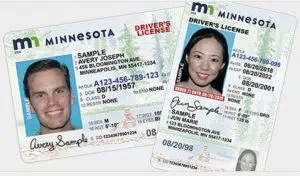
 A new Florida law regarding out-of-state driver’s licenses is causing concern among Minnesota drivers.
This legislation, which has already taken effect, deems out-of-state licenses from Delaware, Connecticut, Hawaii, Rhode Island, and Vermont invalid in Florida if the license holders are residing in the U.S. illegally.
There’s a possibility that Minnesota licenses could be added to this list by October. Currently, Florida’s law demands proof of legal U.S. residency.
If a person from out-of-state is found living in the U.S. unlawfully, they may face citations for driving without a license.
Florida’s Governor asserts that this legislation aims to address the issue of illegal immigrants.
Meanwhile, Minnesota only provides driver’s licenses to those with legal U.S. residency.
However, from October 1, Minnesota’s law will change, allowing any qualified individual, even those without proper documentation, to receive a driver’s license.
This shift in Minnesota’s law coincides with the period when many Minnesotans, often called ‘snowbirds,’ move to Florida for the winter.
Given the new law in Minnesota, Florida’s existing laws, and the common migration pattern between the two states, significant effects on Minnesota residents may be expected.
Some Minnesota residents are not pleased with these potential implications, fearing that their Minnesota license plates could make them a target for traffic stops.
They argue that a driver’s license should grant unrestricted travel within the U.S. without fear of being fined.
The Minnesota Department of Public Safety confirms that a driver’s immigration status cannot be determined from a license issued in the state.
They have committed not to disclose citizenship or immigration information to immigration law enforcement agencies, unless compelled by a court order.
It is predicted that Florida’s law may face legal disputes.
Typically, states are required to respect each other’s laws.
For instance, a marriage that is legal in Minnesota should be recognized in Florida without the need for a second ceremony.
The law could also face a constitutional challenge under the ‘full faith and credit clause’.
Additionally, the law might be viewed as an overreach by Florida, considering that immigration issues are usually a federal matter.