 The Minnesota Pollution Control Agency (MPCA) will present its plans for the cleanup of the Perham Arsenic Site during a Perham City Council working session tonight. The meeting aims to provide a comprehensive overview of the site’s history, the contamination issues, and the upcoming remedial actions.
MPCA to Present Cleanup Plans for Perham Arsenic Site
Perham, MN – The Minnesota Pollution Control Agency (MPCA) will present its comprehensive plans for the cleanup of the Perham Arsenic Site during a Perham City Council working session tonight. The session aims to provide a detailed overview of the site’s history, contamination issues, and the upcoming remedial actions.
Historical Context and Source of Contamination
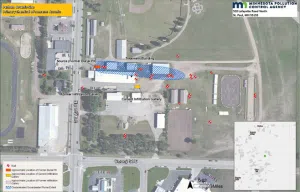
The Perham Arsenic Site has been a concern since 1972, when employees drinking from a newly installed water well reported sickness due to arsenic poisoning. The contamination originates from a pit containing arsenic concentrations exceeding drinking water standards, dating back to the 1930s and 1940s grasshopper infestations. During this period, the U.S. Department of Agriculture distributed lead arsenic mixed with sawdust and molasses across several Minnesota counties to combat crop damage. In 1947, leftover lead arsenic and unused grasshopper bait were buried in a shallow pit at the southwest corner of what was then the Otter Tail County Fairgrounds. This pit, containing up to 2,500 pounds of bait with an estimated 50 pounds of technical-grade lead arsenic, is the source of the current contamination.
Remedial Actions and Ongoing Efforts
The State of Minnesota now owns the contaminated site, which previously belonged to the City of Perham. The MPCA has secured $8 million in bonding funds from the 2020 legislative session to excavate the remaining contaminated soil, aiming to eliminate the need for continued groundwater treatment and ensure long-term protection for the community. Initial remedial efforts began shortly after the contamination was discovered. In 1972, the contaminated well was sealed, and the site was connected to the municipal water supply. Further investigations identified the burial pit, which was capped with clay to reduce rain infiltration and arsenic leaching.
In 1985, the MPCA excavated approximately 200 cubic yards of arsenic-contaminated soil and re-established the clay cap. However, groundwater arsenic levels remained high, prompting the U.S. Environmental Protection Agency (EPA) to implement a groundwater extraction and treatment system in 1997. This system has been operational since 1998, continuously treating contaminated groundwater and reducing arsenic levels.
Current Contamination and Future Plans
Despite these efforts, residual soil and groundwater contamination persist at the site. The remedies in place, including institutional controls established in 2007, help protect human health and the environment. These controls restrict new well construction, prohibit soil disturbance, and require maintenance of the site’s pavement and vegetative cover. Additionally, city ordinances mandate that buildings connect to the municipal water supply when available.
The MPCA plans to use $8 million in bonding funds appropriated in 2020 to excavate the remaining contaminated soil in 2025. This significant step aims to eliminate the source of contamination and negate the need for continued groundwater treatment, ensuring long-term protection for the community.
Community Engagement and Next Steps
MPCA staff will provide detailed information on these efforts and upcoming plans at the city council meeting. The agency encourages community members to attend, learn about the cleanup process, and voice any concerns.
For more information or to schedule an interview, please contact Stephen Mikkelson, MPCA Communications Specialist.
Protecting Perham’s Future
The upcoming cleanup efforts represent a significant stride toward resolving a decades-old issue and safeguarding Perham’s environment and public health. The community’s proactive approach, supported by the MPCA and legislative funding, underscores a commitment to addressing environmental challenges head-on.
Community Engagement and Next Steps
MPCA staff will provide detailed information on these efforts and upcoming plans at the city council meeting.
The agency encourages community members to attend, learn about the cleanup process, and voice any concerns.
For more information about the Perham Arsenic Site and the MPCA’s cleanup initiatives, visit: